

Detect Liver Cancer Earlier for Your High-Risk Patients
HelioLiver LDT is a simple blood test that detects hepatocellular carcinoma (HCC) earlier than ultrasound, from a simple blood draw during a routine visit.
HCC Surveillance Is Recommended — But It's Failing Patients
Guidelines recommend HCC surveillance every six months for high-risk patients, typically with ultrasound and AFP. Yet most eligible patients are never screened — and when they are, ultrasound misses many early, treatable tumors. HelioLiver was designed to close both gaps: a blood draw improves adherence, and combining cell-free DNA methylation with protein markers improves sensitivity for small lesions.
How the HelioLiver Test Works
HelioLiver is a simple blood test that reads cell-free DNA (cfDNA) methylation patterns alongside serum protein tumor markers and clinical information, using machine learning to assess the likelihood of HCC. By reading the molecular signals of cancer in the blood, it can detect disease earlier than imaging alone — particularly the small, early-stage lesions that are hardest to catch.
See How HelioLiver Overcomes Surveillance Obstacles
Validated in the CLiMB Trial, Published in the Journal of Hepatology
CLiMB is the largest completed prospective, multicenter liquid-biopsy liver cancer trial in the United States, using contemporaneous MRI as the reference standard. HelioLiver met its co-primary endpoints — superior sensitivity and non-inferior specificity — compared with ultrasound.
Ordering HelioLiver for Your Patients Is Easy
Order the Test
Order through your office's process via TRF or EMR, or order through Quest Diagnostics. Our team sets up your office with kits and training.
Patient Sample Collection
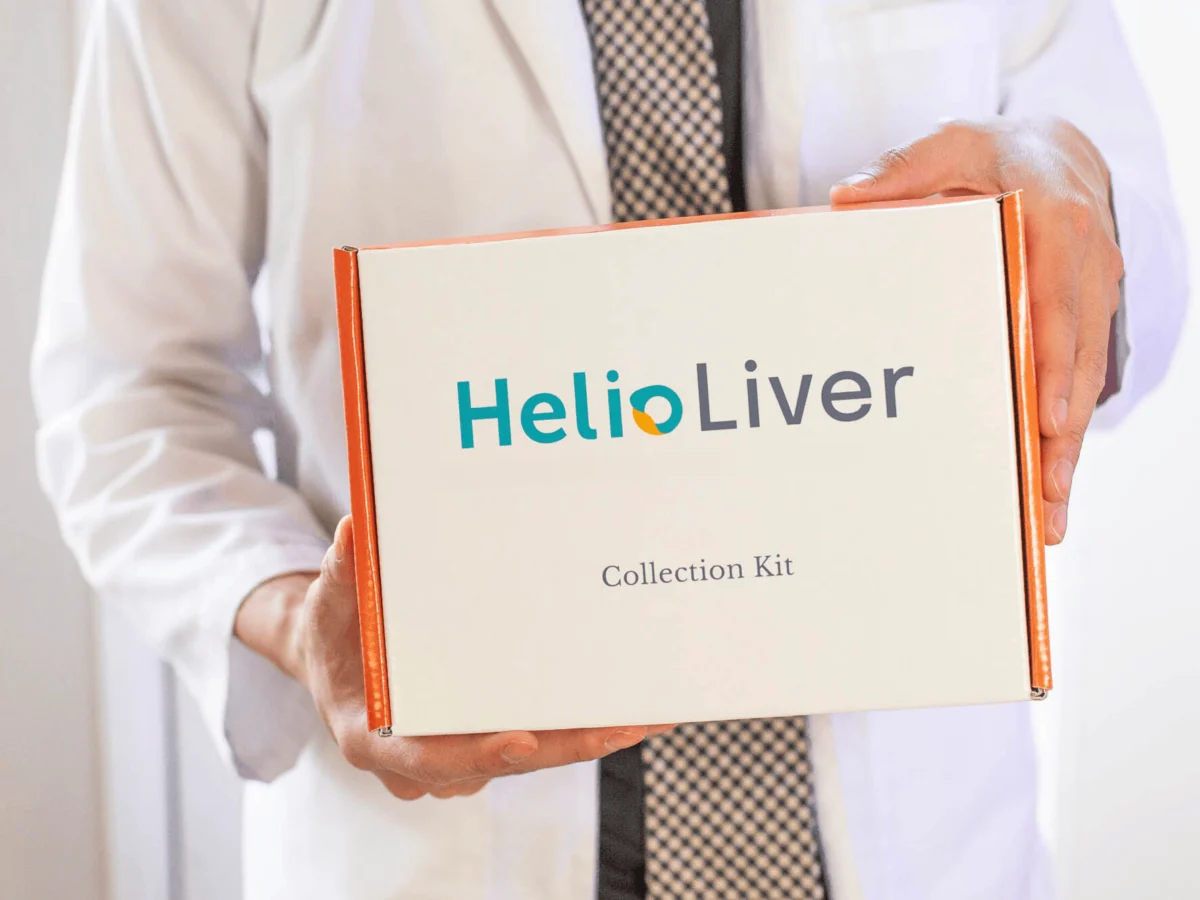
A simple blood draw during a routine visit — no separate imaging appointment. The Collection Kit includes everything needed, with a prepaid return label.
Receive Results
Results are available in 10–14 days. You receive a clear Normal or Abnormal report indicating the likelihood of HCC, with confirmatory imaging (MRI or CT) recommended for abnormal results.
Which of Your Patients May Benefit
HelioLiver LDT is intended for patients at high risk of HCC who are recommended for routine surveillance, including:
Cirrhosis
Cirrhosis of any etiology
Hepatitis B & C
Chronic hepatitis B or hepatitis C
MASLD / NAFLD & alcohol-related
Alcohol-related or metabolic liver disease
Advanced fibrosis & other
Advanced fibrosis, hereditary hemochromatosis, primary biliary cholangitis, Wilson's disease
AASLD recommendation: AASLD recommends HCC surveillance approximately every six months for patients at high risk, such as those with cirrhosis.
Get the Latest Clinical Research for Your Practice
Stay up to date on HelioLiver, HCC surveillance research, and resources for your practice.
Bring Earlier Liver Cancer Detection to Your Practice
Join the providers using HelioLiver to detect HCC earlier — from a simple blood draw.